
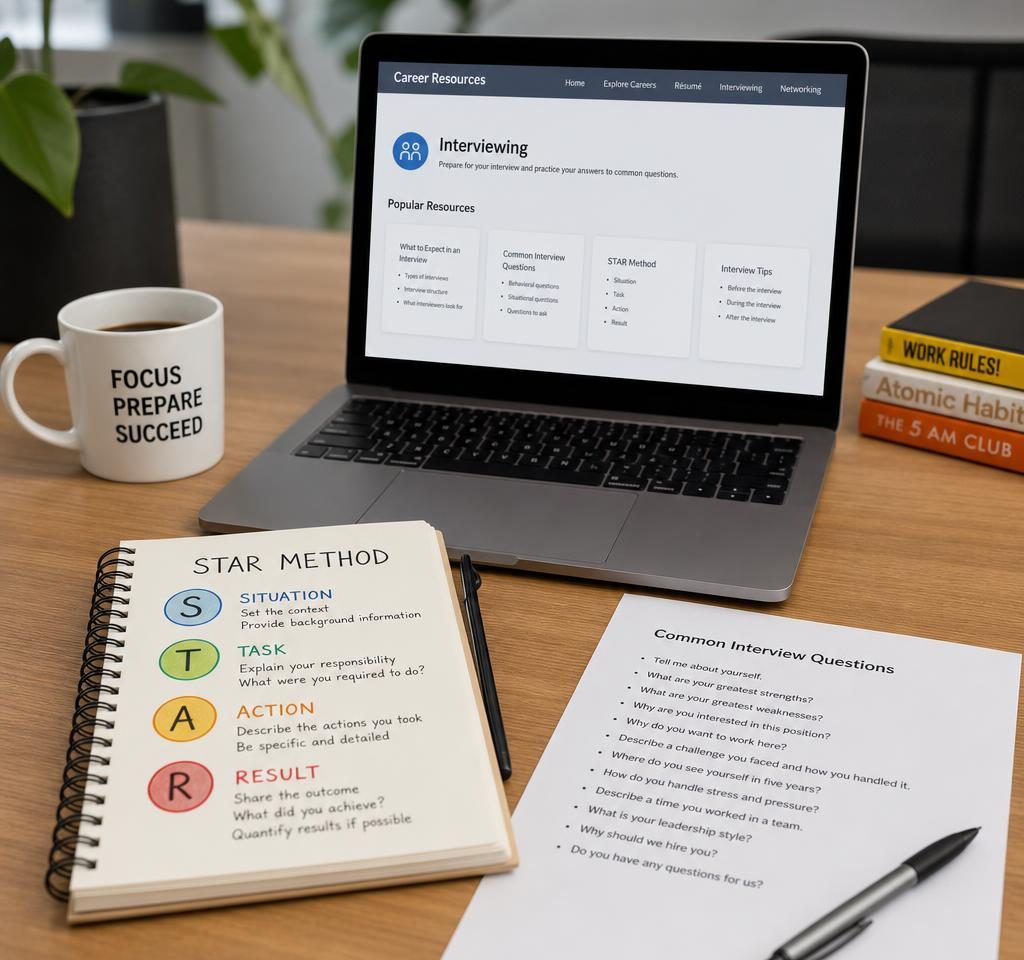
Behavioral interview questions have become one of the most common tools employers use to evaluate candidates. Unlike traditional interview questions that focus on skills or qualifications, behavioral questions require candidates to provide real examples from their past experiences.
Hiring managers believe that past behavior is often the best predictor of future performance. Instead of asking whether you can handle a challenge, they ask you to describe a situation where you successfully handled one.
Many candidates struggle with behavioral interviews because their answers become too long, too vague, or lack measurable results. This is where the STAR Method becomes valuable.
The STAR Method provides a structured framework that helps candidates deliver clear, organized, and impactful answers. By following this approach, you can demonstrate problem-solving abilities, leadership skills, teamwork, communication, adaptability, and other qualities employers seek.
In this guide, you’ll learn exactly how the STAR Method works, why employers use behavioral questions, and how to create interview answers that leave a strong impression.
Why Employers Ask Behavioral Interview Questions
Behavioral questions help interviewers evaluate how candidates have handled situations in the past. Rather than relying on hypothetical responses, employers gain insight into real-world experiences.
These questions often focus on:
- Leadership
- Communication
- Problem-solving
- Conflict resolution
- Teamwork
- Adaptability
- Time management
- Decision-making
Examples of behavioral interview questions include:
- Tell me about a time you faced a difficult challenge at work.
- Describe a situation where you had to meet a tight deadline.
- Give an example of a conflict you resolved with a coworker.
- Tell me about a time you demonstrated leadership.
- Describe a situation where you made a mistake and what you learned from it.
Without a structured response method, many candidates provide incomplete answers that fail to showcase their strengths.
What Is the STAR Method?
The STAR Method is a four-step framework designed to help candidates answer behavioral interview questions effectively.
STAR stands for:
- S – Situation
- T – Task
- A – Action
- R – Result
Each component plays a specific role in creating a complete and compelling answer.
S – Situation
Set the Context
The Situation section explains the background of your example. This should provide enough context for the interviewer to understand the challenge or opportunity you faced.
Keep this section concise and relevant. Avoid spending too much time describing unnecessary details.
Example
“While working as an Operations Coordinator, our company experienced a sudden increase in customer orders during the holiday season. The volume exceeded our normal processing capacity, causing delays and customer complaints.”
This establishes the scenario clearly and prepares the interviewer for the rest of the story.
T – Task
Explain Your Responsibility
The Task section focuses on your specific role within the situation. Interviewers want to understand what was expected of you and what objectives needed to be achieved.
This portion should clarify your responsibility rather than the actions of the entire team.
Example
“My responsibility was to improve order processing efficiency and reduce delivery delays while maintaining customer satisfaction.”
The interviewer now understands both the challenge and your role in addressing it.
A – Action
Describe What You Did
The Action section is the most important part of the STAR Method. This is where you explain the steps you personally took to address the situation.
Focus on your contributions rather than describing what the team did collectively. Use action-oriented language and emphasize decision-making, leadership, communication, and problem-solving skills.
Example
“I analyzed the workflow to identify bottlenecks and discovered that manual inventory updates were causing delays. I coordinated with the warehouse team to implement a simplified tracking process and created a daily reporting system that improved communication between departments. I also trained team members on the new process to ensure consistency.”
This section demonstrates initiative and highlights the candidate’s direct involvement.
R – Result
Show the Outcome
The Result section explains the impact of your actions. This is where you demonstrate success and quantify outcomes whenever possible.
Employers want evidence that your actions produced meaningful results.
Example
“Within six weeks, order processing time improved by 30%, customer complaints decreased by 25%, and on-time deliveries returned to normal levels. The new process was later adopted across other departments.”
Quantifiable results make answers more persuasive and memorable.
Why the STAR Method Works
The STAR Method helps candidates stay focused and organized. Instead of providing long, confusing stories, you deliver answers that clearly explain:
- The situation you faced.
- Your responsibility.
- The actions you took.
- The results you achieved.
This structure makes it easier for interviewers to evaluate your qualifications and understand your contributions.
Sample STAR Method Answer
Question: Tell Me About a Time You Solved a Difficult Problem
Situation: Our customer service department was receiving an increasing number of complaints regarding delayed responses.
Task: As the team lead, I was responsible for identifying the cause of delays and improving response times.
Action: I reviewed workflow data, identified staffing gaps during peak hours, adjusted schedules, and implemented a ticket-prioritization system.
Result: Response times improved by 40%, customer satisfaction scores increased by 18%, and complaint volume decreased significantly within three months.
This example demonstrates clear structure, measurable outcomes, and strong problem-solving skills.
Common Behavioral Interview Questions and STAR Method Answers
One of the best ways to prepare for behavioral interviews is to practice answering common questions using the STAR framework. The more examples you prepare in advance, the more confident and natural your responses will feel during the interview.
Question 1: Tell Me About a Time You Worked Under Pressure
Situation: During the final week of a major client project, two team members unexpectedly went on leave, creating a resource shortage.
Task: I needed to ensure the project remained on schedule while maintaining quality standards.
Action: I reviewed project priorities, reassigned tasks among available team members, and held brief daily check-ins to monitor progress and address issues quickly.
Result: The project was delivered on time, met all client requirements, and received positive feedback from senior management.
How to Build Strong STAR Stories Before the Interview
One of the biggest mistakes candidates make is trying to create examples during the interview. Instead, prepare several STAR stories in advance.
Identify examples from your career that demonstrate:
- Leadership
- Adaptability
- Conflict resolution
- Problem-solving
- Customer service
- Innovation
- Time management
- Team collaboration
Having multiple stories ready allows you to adapt your answers to different questions.
Advanced STAR Method Tips
Focus on Your Contributions
Interviewers want to understand your role in the outcome. While teamwork is important, avoid overusing “we” throughout your answers.
Instead, clearly explain what actions you personally took.
Keep Answers Concise
A strong STAR response typically lasts between one and two minutes. Long answers may cause interviewers to lose focus.
Stay relevant and avoid unnecessary details.
Use Positive Examples
Even when discussing challenges or mistakes, focus on growth, learning, and positive outcomes.
Employers appreciate candidates who take responsibility and demonstrate continuous improvement.
Quantify Results Whenever Possible
Results become more impactful when supported by numbers.
For example:
Weak Result:
“Customer satisfaction improved.”
Strong Result:
“Customer satisfaction scores increased by 22% within four months.”
Specific results help interviewers understand the value you delivered.
STAR Method Mistakes to Avoid
Providing Too Much Background
Many candidates spend most of their answer describing the situation and very little time discussing their actions and results.
The Action and Result sections should receive the greatest emphasis.
Using Hypothetical Examples
Behavioral questions require real experiences — avoid answering with what you would do and explain what you actually did instead.
Choosing Weak Examples
Select examples that demonstrate meaningful accomplishments, leadership, initiative, or problem-solving abilities. Routine tasks rarely create memorable interview answers.
Failing to Explain Results
Never end an answer after describing your actions — the Result section often determines the effectiveness of the entire answer.
Frequently Asked Questions
What Is the STAR Method in Interviewing?
STAR stands for Situation, Task, Action, and Result, a structured approach for answering behavioral interview questions with organized, detailed answers that demonstrate real skills instead of vague claims.
How Long Should a STAR Method Answer Be?
Most STAR Method answers should be between one and two minutes long. This gives you enough time to explain the situation, your actions, and the results without overwhelming the interviewer.
A concise answer is often more effective than a lengthy story with unnecessary details.
Can I Use the Same STAR Example for Multiple Questions?
Yes. A strong example can often be adapted to answer different behavioral questions. For instance, a project leadership example might demonstrate leadership, communication, problem-solving, and teamwork skills.
However, it’s best to prepare multiple stories so your responses remain varied and relevant.
What If I Have Limited Work Experience?
Students and recent graduates can use examples from internships, volunteer work, academic projects, extracurricular activities, or part-time jobs.
Behavioral interviews focus on your actions and decision-making, not necessarily your job title.
Should I Memorize STAR Answers?
No. Memorizing answers word-for-word can make you sound robotic and less authentic.
Instead, remember the key points of each story and practice delivering them naturally.
How Many STAR Stories Should I Prepare?
Most career coaches recommend preparing at least 8 to 10 examples that cover different competencies.
These should include stories related to:
- Leadership
- Teamwork
- Conflict resolution
- Problem-solving
- Adaptability
- Customer service
- Communication
- Time management
- Innovation
- Decision-making
Having a variety of examples ensures you’re prepared for almost any behavioral interview question.
What Types of Results Should I Include?
Whenever possible, use measurable outcomes.
Examples include:
- Revenue growth
- Cost savings
- Efficiency improvements
- Customer satisfaction increases
- Project completion rates
- Reduced processing times
- Higher productivity levels
Numbers help interviewers understand the impact of your contributions.
Behavioral Interview Preparation Checklist
Before your next interview, review this checklist:
- Prepare at least 8–10 STAR stories.
- Focus on measurable accomplishments.
- Practice concise responses.
- Review the job description carefully.
- Identify key skills the employer values.
- Match your examples to those skills.
- Practice speaking confidently.
- Prepare examples from different situations.
- Emphasize your personal contributions.
- End every answer with a clear result.
Following this process can dramatically improve your interview performance.
Why the STAR Method Helps Candidates Stand Out
Interviewers often speak with multiple qualified candidates who possess similar education and technical skills. The difference frequently comes down to how effectively they communicate their experiences. The STAR Method transforms ordinary experiences into compelling professional stories backed by real evidence, helping you appear more organized, confident, and prepared than candidates who answer without structure.
Conclusion
Behavioral interview questions are designed to uncover how you think, act, and perform in real workplace situations. While these questions can feel intimidating, the STAR Method provides a simple and effective framework for delivering clear, persuasive answers.
By focusing on the Situation, Task, Action, and Result, you can organize your thoughts, highlight your accomplishments, and demonstrate the value you bring to employers. Whether you’re discussing leadership, teamwork, conflict resolution, problem-solving, or adaptability, the STAR Method helps ensure your answers remain focused and impactful.
The key to success is preparation. Develop several STAR stories before your interview, practice them regularly, and adapt them to different questions. Strong preparation builds confidence and clearer communication.
Interviewers are not looking for perfect candidates — they want professionals who demonstrate growth, initiative, accountability, and measurable results. The STAR Method allows you to showcase all of these qualities in a structured and memorable way.
With consistent practice, the STAR Method helps you perform more confidently and improve your chances of receiving job offers.
Need Help Positioning Your Experience for Interviews?
Strong interview performance starts with a strong resume. If your resume does not effectively communicate your accomplishments, it can be difficult to build compelling STAR Method examples.
Professional resume writers can help highlight achievements, quantify results, and create career documents that support successful interview preparation.
Learn more about professional resume writing services at https://upgraderesume.com/professional-resume-writing-services/.
If you’re looking to strengthen your overall job search strategy, career branding, and LinkedIn presence, visit https://upgraderesume.com/ for additional resources and expert guidance.
The right preparation can help you secure more interviews, communicate your value effectively, and move closer to your next career opportunity.